



Psoriasis – Everything You Need to Know for Flare-Free Skin
What is Psoriasis?
Psoriasis is a chronic autoimmune skin condition that speeds up the life cycle of skin cells, leading to itchy, red, scaly patches. It’s not contagious but can significantly affect your confidence and comfort. Psoriasis can appear anywhere — commonly on the scalp, elbows, knees, and lower back.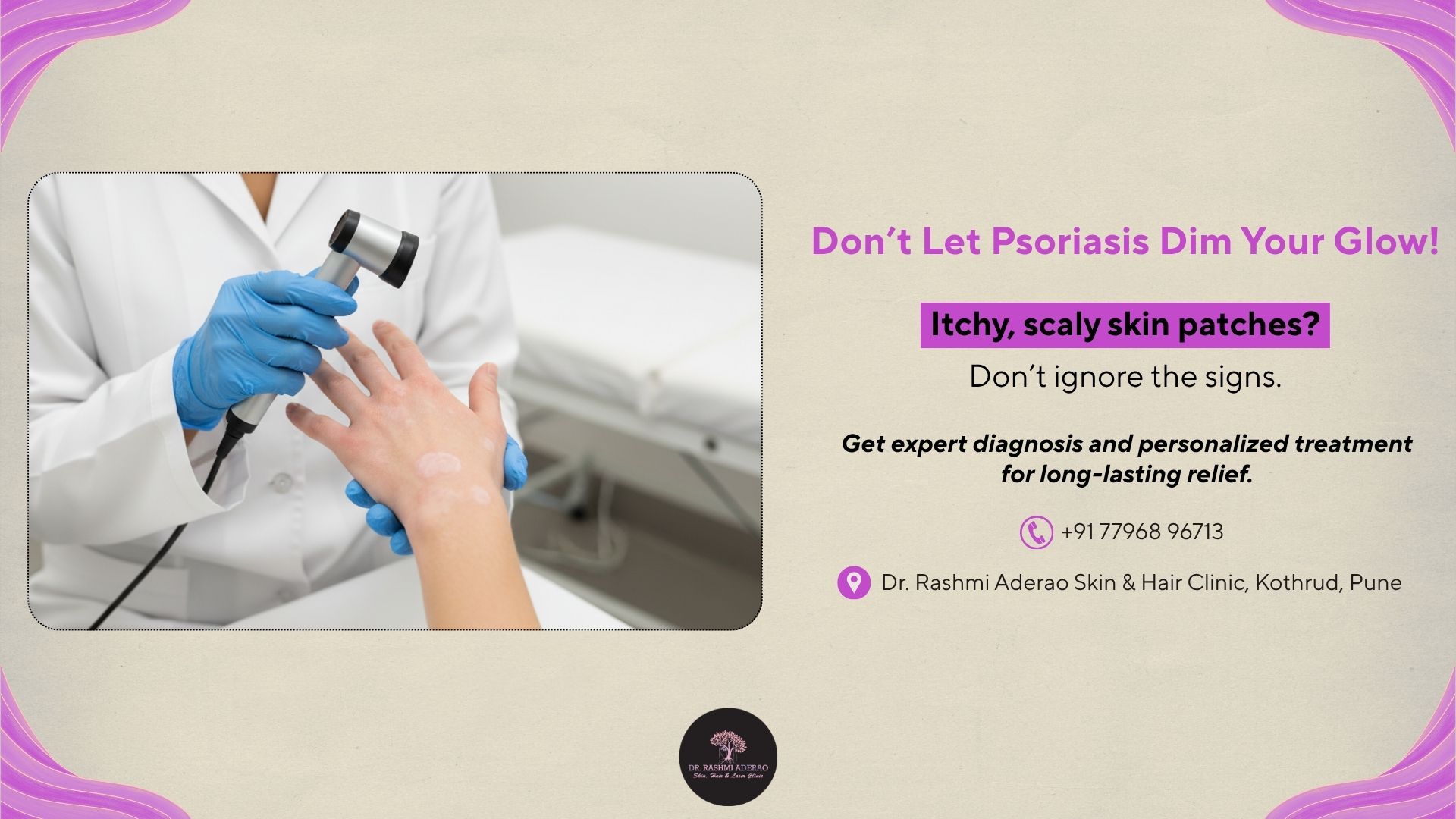
Common Symptoms of Psoriasis
- Dry, cracked skin that may bleed
- Itching, burning, or soreness
- Thickened or ridged nails
- Scaly patches on scalp or body
- Joint pain (in psoriatic arthritis)
If you notice these symptoms, it’s best to consult a dermatologist early for diagnosis and management.
Top Causes & Triggers of Psoriasis
While genetics play a major role, psoriasis flare-ups are often linked to certain triggers:
- Stress: High stress levels can worsen inflammation.
- Cold weather: Dry air can make skin flare up.
- Infections: Especially throat or skin infections.
- Certain medications: Beta-blockers, lithium, or anti-malarials.
- Lifestyle habits: Smoking, alcohol, and poor sleep.
Our clinic continuously upgrades technology to ensure optimal patient outcomes. Recently, we introduced advanced dermatology systems that enhance treatment precision and patient comfort. Learn more here: https://drrashmiskinclinic.com/advanced-laser-technology-launched-at-dr-rashmi-aderao-skin-and-hair-clinic-in-pune/
Effective Psoriasis Treatments (Medical & Natural Options)
Depending on the severity, your dermatologist may recommend:
- Topical Treatments
- Corticosteroid creams for reducing inflammation.
- Vitamin D analogues like calcipotriol to slow cell growth.
- Coal tar & salicylic acid to remove scales.
- Phototherapy
Controlled exposure to UV light reduces inflammation and slows cell turnover.
- Oral & Injectable Medications
For moderate to severe cases, biologic injections and immune-modulating tablets can provide long-term control.
- Natural & Home Remedies
- Aloe vera gel to soothe itching.
- Coconut oil for moisturizing.
- Oatmeal baths to calm irritation.
- Anti-inflammatory diet (fish, turmeric, flaxseed, leafy greens).
Daily Skin Care Routine for Psoriasis
Your skin needs consistent care and hydration to prevent flare-ups:
| Morning | Night |
| Gentle, fragrance-free cleanser | Lukewarm shower (avoid hot water) |
| Apply thick, non-comedogenic moisturizer | Apply medicated cream or ointment |
| Use sunscreen SPF 30+ | Wear loose, cotton clothing |
| Avoid scratching or picking scales | Keep bedroom air humidified |
Psoriasis Diet: Foods to Eat & Avoid
✅ Eat More:
- Omega-3-rich foods (fish, flaxseed, walnuts)
- Leafy greens & berries
- Turmeric & ginger
❌ Avoid:
- Processed foods
- Sugary snacks
- Red meat & dairy (for some people)
- Alcohol & caffeine (may trigger inflammation)
Emotional Wellbeing & Psoriasis
The emotional impact of psoriasis is often overlooked. Stress and anxiety can worsen flare-ups. Try:
- Yoga or meditation
- Regular exercise
- Talking to a counselor or support group
Remember, psoriasis is not your fault, and with the right treatment plan, you can live flare-free and confident.
When to See a Dermatologist
If your psoriasis is spreading, painful, or affecting your nails or joints, it’s time to visit a certified dermatologist near you. Early treatment can prevent long-term complications and boost your quality of life.
Conclusion
Managing psoriasis is about more than just creams — it’s a balance of medical care, daily skincare, and mental wellness. With the right approach, you can keep flare-ups under control and enjoy clear, healthy skin.
You can explore our social media pages to watch real treatment videos, before-and-after results, and patient care insights. See how our procedures are performed and understand the quality of care we provide : https://www.instagram.com/p/DSUL4IED0-z/