


Is That Just a Rash—or a Monsoon Fungal Infection? Know Before It Spreads!
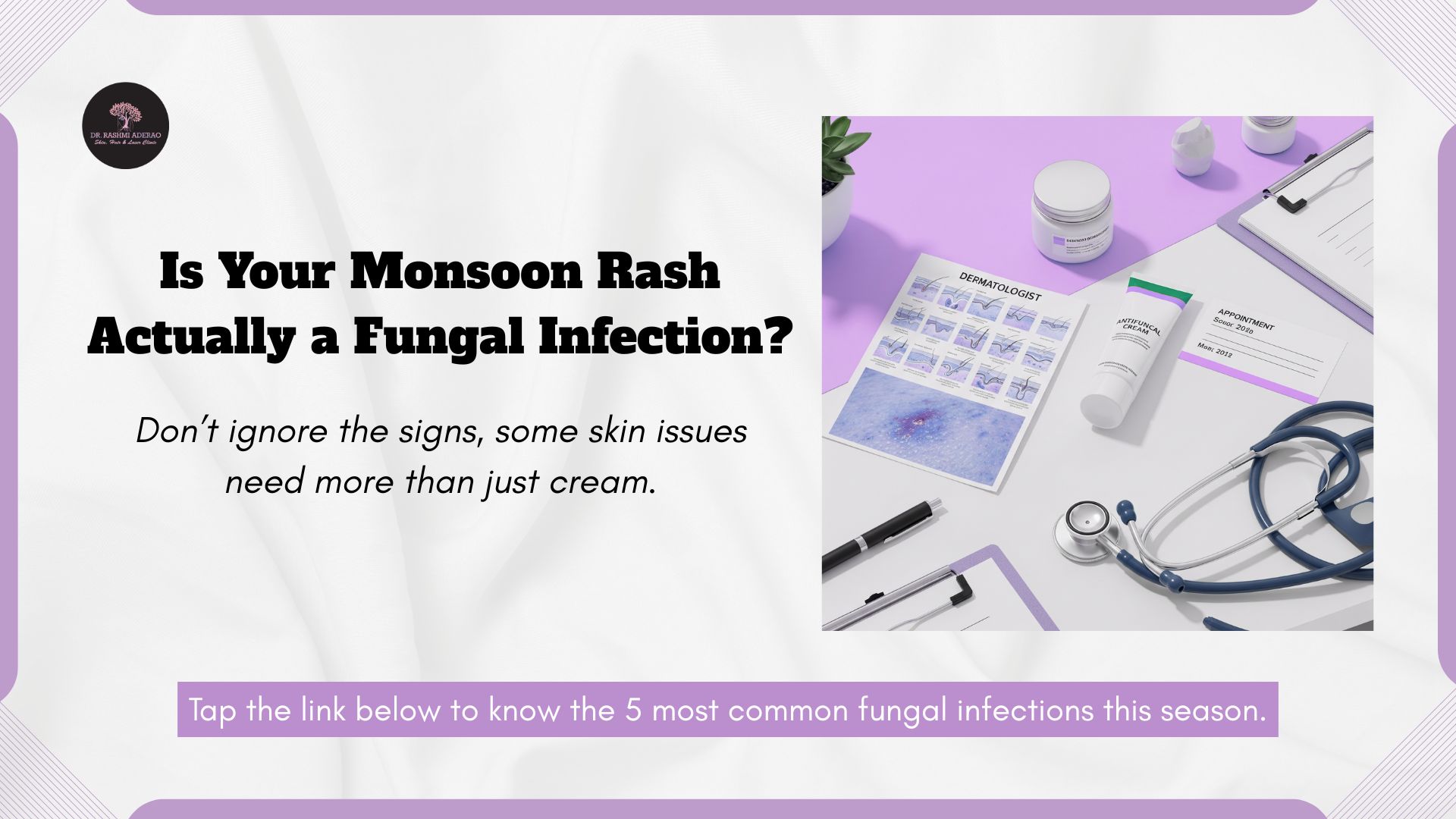
Monsoon Fungal Infections: What Every Indian Should Know
Rainy season brings relief from the scorching heat—but also opens the door to several skin problems, especially fungal infections. High humidity, wet clothes, and poor ventilation create the perfect breeding ground for fungi. If you’ve ever experienced itchy, red, or flaky skin during monsoon, chances are you’ve dealt with a fungal infection.
In this blog, we’ll break down the top 5 common fungal infections during monsoon, how to spot them early, and most importantly—how to treat and prevent them.
- Ringworm (Tinea Corporis)
Symptoms: Circular, red, itchy patches with a clear centre and raised border.
Why It Happens: Prolonged sweating, tight clothes, and poor hygiene make the skin vulnerable.
Where It Appears: Arms, legs, back, or any part of the body.
Treatment:
- Topical antifungal creams (Clotrimazole, Terbinafine)
- Avoid scratching to prevent spreading
- Keep the area dry and clean
- Athlete’s Foot (Tinea Pedis)
Symptoms: Peeling skin, cracked heels, bad odor, and intense itching between toes.
Causes: Walking barefoot on wet surfaces, sweaty shoes, and wearing the same socks all day.
Treatment:
- Antifungal foot powders
- Change socks daily
- Dry feet thoroughly after washing
- Candidiasis (Yeast Infection)
Symptoms: White patches, burning, redness, or thick discharge in skin folds or intimate areas.
High-Risk Zones: Underarms, groin, under breasts, and genital area.
What Triggers It: Excess moisture in body folds, synthetic clothing, and poor air circulation.
Treatment:
- Antifungal ointments or oral medications
- Wearing loose, cotton clothes
- Drying folds properly after bath
- Tinea Cruris (Jock Itch)
Symptoms: Itchy, red rashes in the groin and inner thighs.
Who Gets It: Common in men, athletes, and people who sweat a lot.
Triggered By: Wearing damp underwear, friction, and obesity.
Treatment:
- Antifungal creams and powders
- Avoid synthetic undergarments
- Use talcum powder to keep the area dry
- Tinea Capitis (Scalp Ringworm)
Symptoms: Scaly, itchy scalp, hair loss in patches, and black dots.
Mostly Seen In: Children and teens.
Causes: Sharing combs, towels, helmets, and poor scalp hygiene.
Treatment:
- Oral antifungals (prescribed by a dermatologist)
- Medicated shampoos with Ketoconazole
- Avoid sharing personal items
Prevention Tips: How to Stay Fungal-Free This Monsoon
- Dry skin thoroughly after bathing, especially in body folds.
- Wear loose-fitting cotton clothes.
- Change out of wet clothes and socks immediately.
- Avoid sharing towels, combs, or clothes.
- Apply antifungal powders in moisture-prone areas.
- Use antibacterial soaps and mild cleansers.
- Consult a certified dermatologist if symptoms persist beyond a week.
When to See a Dermatologist?
If your symptoms:
- Last more than 7 days despite treatment
- Get worse over time
- Are accompanied by pus, severe redness, or fever
…it’s time to consult a skin specialist.
Fungal infections during monsoon are common, but they are entirely preventable and treatable with timely care. Don’t ignore that itch—because early treatment prevents the infection from spreading and reduces recovery time.
Need expert help? Book a consultation with Dr. Rashmi Aderao.
Personalized care, proper diagnosis, and quick relief—because your skin deserves expert attention.