



As the warmer days continue, protecting your skin from excessive heat and strong ultraviolet (UV) exposure becomes essential. Even during seasonal transitions, rising temperatures and humidity can trigger common concerns like prickly heat, sunburn, tanning, and dehydration. With the right preventive approach, you can comfortably enjoy outdoor activities while maintaining healthy, irritation-free skin. Below are practical and easy-to-follow tips to help you minimize the risk of heat rashes and sun damage.
Apply Sunscreen Daily
Make sunscreen a non-negotiable part of your routine. Choose a broad-spectrum sunscreen with SPF 30 or above to guard against both UVA and UVB rays. Apply it generously on all exposed areas such as the face, ears, neck, hands, and feet. Reapply every two hours, particularly if you are sweating or spending extended time outdoors.
Plan Outdoor Activities Smartly
Try to avoid direct sunlight when it is strongest, typically between late morning and mid-afternoon. If possible, schedule outdoor tasks early in the morning or later in the evening. Reducing exposure during peak heat hours lowers the chances of sunburn and heat-related irritation.
Choose Comfortable, Protective Clothing
Wear loose, breathable fabrics like cotton or linen to allow airflow and reduce sweat buildup. Long sleeves, full-length trousers, and wide-brimmed hats provide additional coverage. Light-colored clothing reflects sunlight and helps keep the body cooler.
Keep Your Skin Clean and Dry
Sweat accumulation can clog pores and cause prickly heat. After returning from outdoors, gently cleanse your skin to remove dirt and sweat. Pat your skin dry instead of rubbing it harshly, as friction may worsen irritation.
Maintain Adequate Hydration
Drinking enough water throughout the day helps regulate body temperature and keeps your skin hydrated from within. Include hydrating foods such as fruits and vegetables in your diet. Limiting caffeinated and sugary drinks can also help prevent dehydration.
Avoid Overexertion in High Temperatures
Strenuous physical activity during hot weather increases sweating and the likelihood of heat rashes. Take regular breaks, rest in shaded areas, and replenish fluids frequently when engaging in outdoor exercise or sports.
Cool Your Body Regularly
Using fans, air conditioning, or well-ventilated spaces helps maintain a comfortable indoor temperature. Taking cool showers after outdoor exposure can calm overheated skin and provide relief from mild irritation.
Check the Daily UV Levels
Stay aware of the UV index forecast in your area. On days when UV radiation is high, increase protective measures such as wearing sunglasses, reapplying sunscreen more often, and limiting direct sun exposure.
Be Alert to Early Symptoms
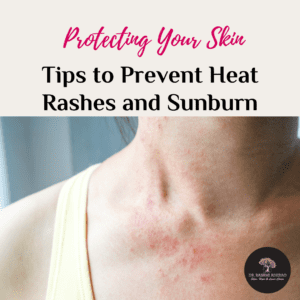
Redness, itching, small blisters, or a prickling sensation may indicate the onset of heat rash or sunburn. Addressing these signs early by cooling the skin and applying soothing products can prevent the condition from worsening.
Conclusion
Protecting your skin from heat rashes and sunburn requires consistent care and smart lifestyle habits. Regular sunscreen use, breathable clothing, proper hydration, and mindful sun exposure can significantly reduce seasonal skin problems. If irritation persists or becomes severe, consult a qualified healthcare professional for appropriate treatment. With proactive care, you can enjoy the season while keeping your skin healthy and protected.